


What is an ICCID Number? SIM Card Identity Explained for IoT
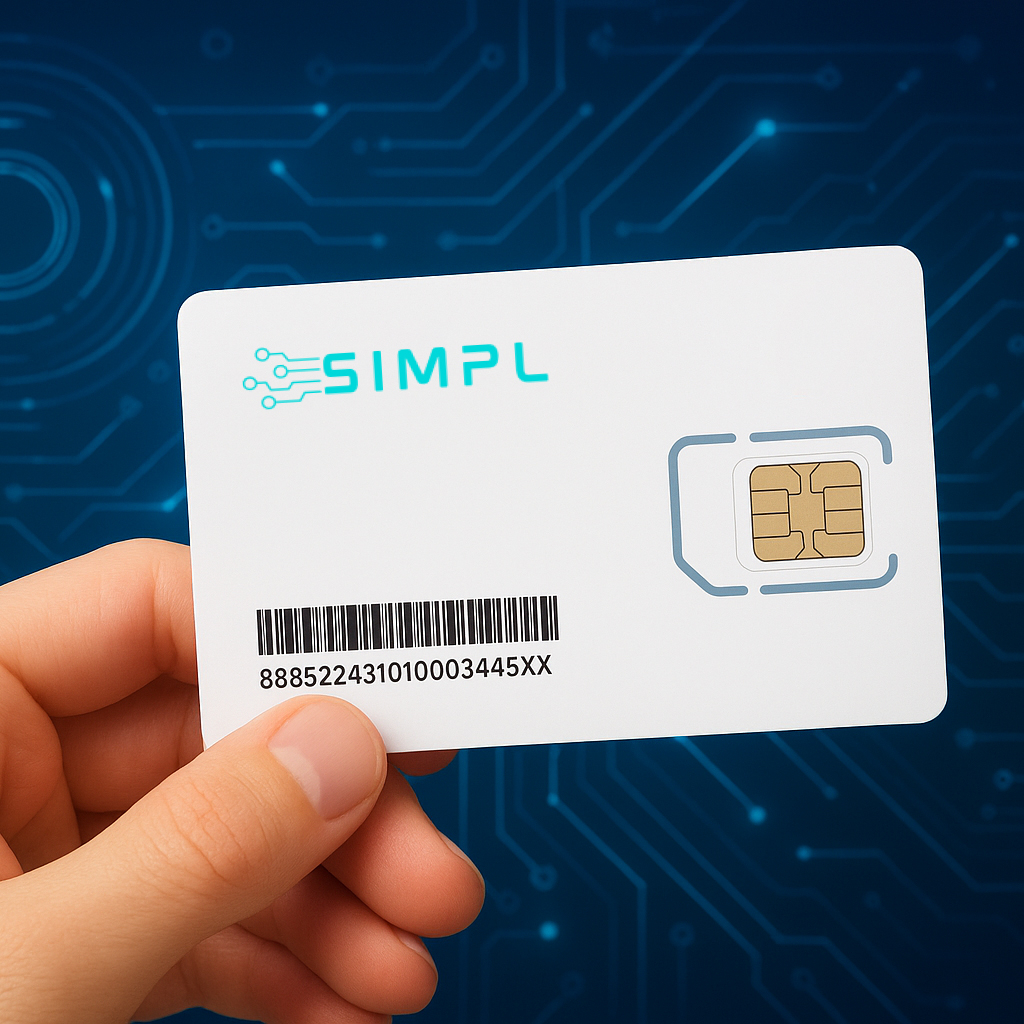

Every SIM card carries an identity. Behind the plastic card or inside an eSIM profile sits a long string of digits known as the ICCID number. It may look like random code, but this identifier is what allows networks, platforms, and enterprises to recognize a SIM, manage it, and connect devices to the world.
In consumer mobile use, the ICCID rarely comes up. For IoT, it’s a different story. When you’re deploying thousands of devices across countries and carriers, understanding the ICCID isn’t optional, it’s essential. And with eSIM and multi-profile technology, ICCID has evolved from something static into a dynamic piece of IoT identity management.
What is an ICCID Number?
ICCID stands for Integrated Circuit Card Identifier. It’s the unique identifier assigned to every SIM card or eSIM profile, usually 19 to 20 digits long.
The ICCID is made up of several parts:
- The prefix (always beginning with "89" for telecom).
- The country and issuer codes.
- The unique account number.
- A final check digit for validation.
In simple terms, the ICCID is the SIM’s passport number. Without it, a SIM profile can’t be uniquely recognized or validated.
ICCID vs IMSI vs IMEI
SIM cards and devices have multiple identifiers, and they’re often confused. Here’s the breakdown:
- ICCID number: Identifies the SIM card or SIM profile.
- IMSI (International Mobile Subscriber Identity): Identifies the subscriber and is used by carriers to authenticate to the network.
- IMEI (International Mobile Equipment Identity): Identifies the physical device itself.
Think of it this way: the ICCID belongs to the SIM, the IMSI belongs to the subscription, and the IMEI belongs to the device hardware. In IoT, you often need all three for device onboarding, connectivity management, and troubleshooting.
ICCID in Traditional SIM Cards
With a physical SIM card, things are straightforward. One SIM means one profile, which means one ICCID. That number is printed on the SIM and stored on the chip. If you’ve ever seen a long number starting with "89" on the back of a card, that’s the ICCID.
For mobile users, it’s easy enough: insert the SIM, and you’re connected. But in IoT, swapping SIMs in every device across a global deployment is expensive, time-consuming, and often impossible. That’s where eSIM changes the game.
ICCID in eSIM and Multi-Profile IoT
Unlike a single-profile SIM, an eUICC (embedded Universal Integrated Circuit Card) can hold multiple operator profiles. Each profile has its own ICCID number. Profiles can be added, updated, enabled, disabled, or deleted — all remotely, over the air.
One device can hold more than one operator profile. Each profile comes with its own ICCID and IMSI. Take a logistics tracker: it might have profiles for Europe, Asia, and North America. When it crosses borders, the active profile switches. The device stays connected. No SIM swap needed.
This is exactly what we enable at SIMPL with EverSIM. Our multi-profile solution gives enterprises the ability to manage ICCIDs dynamically. Profiles can be downloaded and switched with just a few clicks, all through a secure, GSMA-compliant platform. Instead of being locked to one carrier, your devices carry multiple ICCIDs and you control which one is active.
GSMA Standards and ICCID
The role of ICCID in IoT is defined by GSMA standards, which continue to evolve:
- SGP.02: The original M2M specification. Functional but heavy, requiring multiple components like SM-DP and SM-SR.
- SGP.22: Opened up remote provisioning for consumer devices and IoT, enabling secure profile downloads.
- SGP.31 and SGP.32: The newest standards, designed specifically for IoT. They simplify provisioning, reduce complexity, and make large-scale ICCID and profile management far easier for enterprises.
Across all of these, ICCID remains the anchor. Each profile provisioned under these standards carries its own ICCID number, ensuring consistency and security.
Why is ICCID Relevant to Cellular IoT?
The ICCID might seem like a technical detail, but it’s central to how cellular IoT works:
- Global connectivity: Multi-profile eSIMs use ICCIDs to switch between networks seamlessly.
- Scalability: Managing 10,000 IoT devices means managing 10,000 ICCIDs. With multi-profile, that number multiplies, making ICCID management essential.
- Troubleshooting: When a device loses connection, knowing the active ICCID helps identify which profile or carrier is causing issues.
- Security: ICCID combined with GSMA provisioning ensures encrypted, authenticated device identities.
- Lifecycle management: Enterprises can update or retire ICCIDs without ever touching the device.
That’s why ICCID is more relevant than ever. It’s no longer just the number on a SIM card, it’s the digital identity that makes IoT scalable and secure.
Challenges in ICCID Management
Managing one ICCID per SIM is easy. Managing multiple ICCIDs per device across fleets of thousands? That’s another level of complexity.
Multi-profile eSIMs are powerful, but they multiply identifiers. Each device can carry several ICCIDs, active or inactive. Tracking, switching, and optimizing them at scale requires more than spreadsheets, it requires platforms built for IoT.
That’s where SIMPL comes in. Our platform doesn’t just provision profiles; it unifies ICCIDs under the eIDand simplifies management across regions, carriers, and devices. With EverSIM, you get visibility and control over every ICCID in your network, all through a single dashboard.
How SIMPL Makes ICCID Management Effortless
ICCID management isn’t something most companies want to spend time on, but it’s something they can’t ignore. SIMPL was built to make it easier.
Through EverSIM, enterprises can:
- See every ICCID number tied to every device in one dashboard.
- Switch between profiles without physical intervention.
- Automate provisioning workflows to scale faster.
- Secure SIM identities with GSMA-compliant provisioning.
- Manage connectivity globally without dealing with fragmented carrier portals.
This means your IoT devices aren’t tied down to one operator. They can move, switch, and stay connected — all controlled from a single, unified platform.
Final Takeaway
The ICCID number may look like just digits on a SIM, but it’s the foundation of cellular identity. In IoT, where devices roam globally and rely on multiple carriers, ICCID becomes even more powerful. With multi-profile eSIMs, ICCID is no longer static, it’s flexible, dynamic, and central to managing connectivity.
At SIMPL, we help businesses make sense of it all. Our EverSIM solution lets you download, enable, or delete profiles, manage multiple ICCIDs per device, and maintain secure global connectivity, all in one place.
Connectivity shouldn’t be a bottleneck. With the right ICCID management, it becomes an accelerator. And with SIMPL, that’s exactly what it is.
 SIMPL Announces Its New Digital Home: JustSimpl.com